 Image 1 of 1
Type: Rocambole, hardneck
Harvest window: Late season
Storage potential: Medium term
Named after one of the most biodiverse mountain ranges in Europe, the Carpathian mountains of Poland, this variety is a Cook’s Illustrated tasting contest winner. Deemed an optimal balance of rich, sweet, and strong (very typical for a rocambole type). Much like German Red, some boldness and heat lingers when raw, but not in an overwhelming fashion.
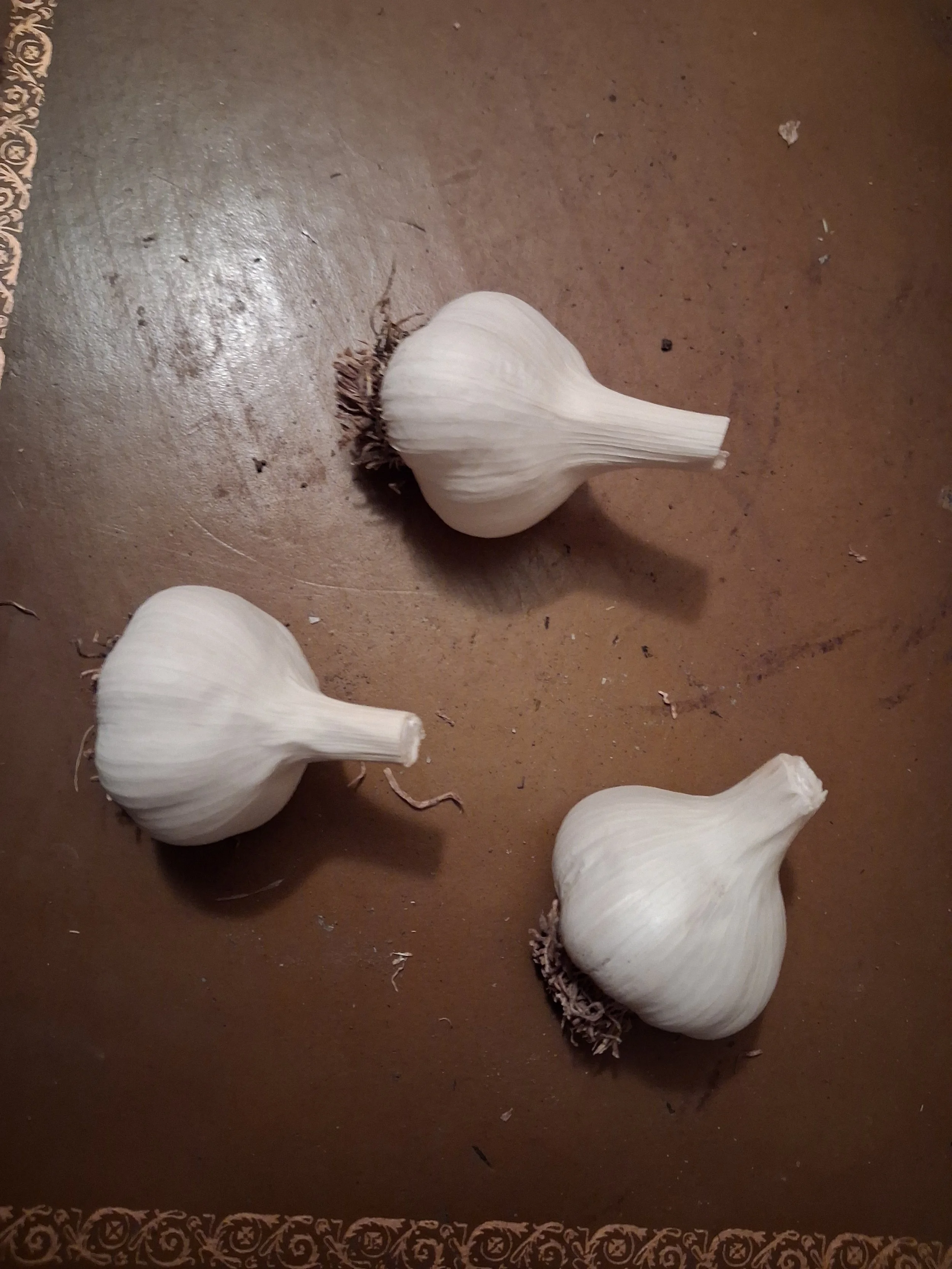
This hardneck has one layer of plump cloves, bulb wrappers are white while clove wrappers are a solid rosy beige. Cloves are loosely wrapped, leading to a medium storage life span.
Plants are very slow to sprout and mature very late. The leaves are pointier with a deep blue-green color and better resist rust than other varieties. Even after all the leaves started turning brown, the bulbs underground still needed more water and time to develop. It was the last variety harvested in 2026, later than the rest by a month, a true test of patience.
Type: Rocambole, hardneck
Harvest window: Late season
Storage potential: Medium term
Named after one of the most biodiverse mountain ranges in Europe, the Carpathian mountains of Poland, this variety is a Cook’s Illustrated tasting contest winner. Deemed an optimal balance of rich, sweet, and strong (very typical for a rocambole type). Much like German Red, some boldness and heat lingers when raw, but not in an overwhelming fashion.
This hardneck has one layer of plump cloves, bulb wrappers are white while clove wrappers are a solid rosy beige. Cloves are loosely wrapped, leading to a medium storage life span.
Plants are very slow to sprout and mature very late. The leaves are pointier with a deep blue-green color and better resist rust than other varieties. Even after all the leaves started turning brown, the bulbs underground still needed more water and time to develop. It was the last variety harvested in 2026, later than the rest by a month, a true test of patience.