 Image 1 of 1
Type: Rocambole, hardneck
Harvest window: Mid season
Storage potential: Medium term
The exact origin is unknown, it has a history of arriving with German immigrants to the US over a century ago. As a rocambole type, its flavor tends to be deep, earthy, velvety, even savory at times. When raw there’s a lingering heat with a sharpness that doesn’t overpower.
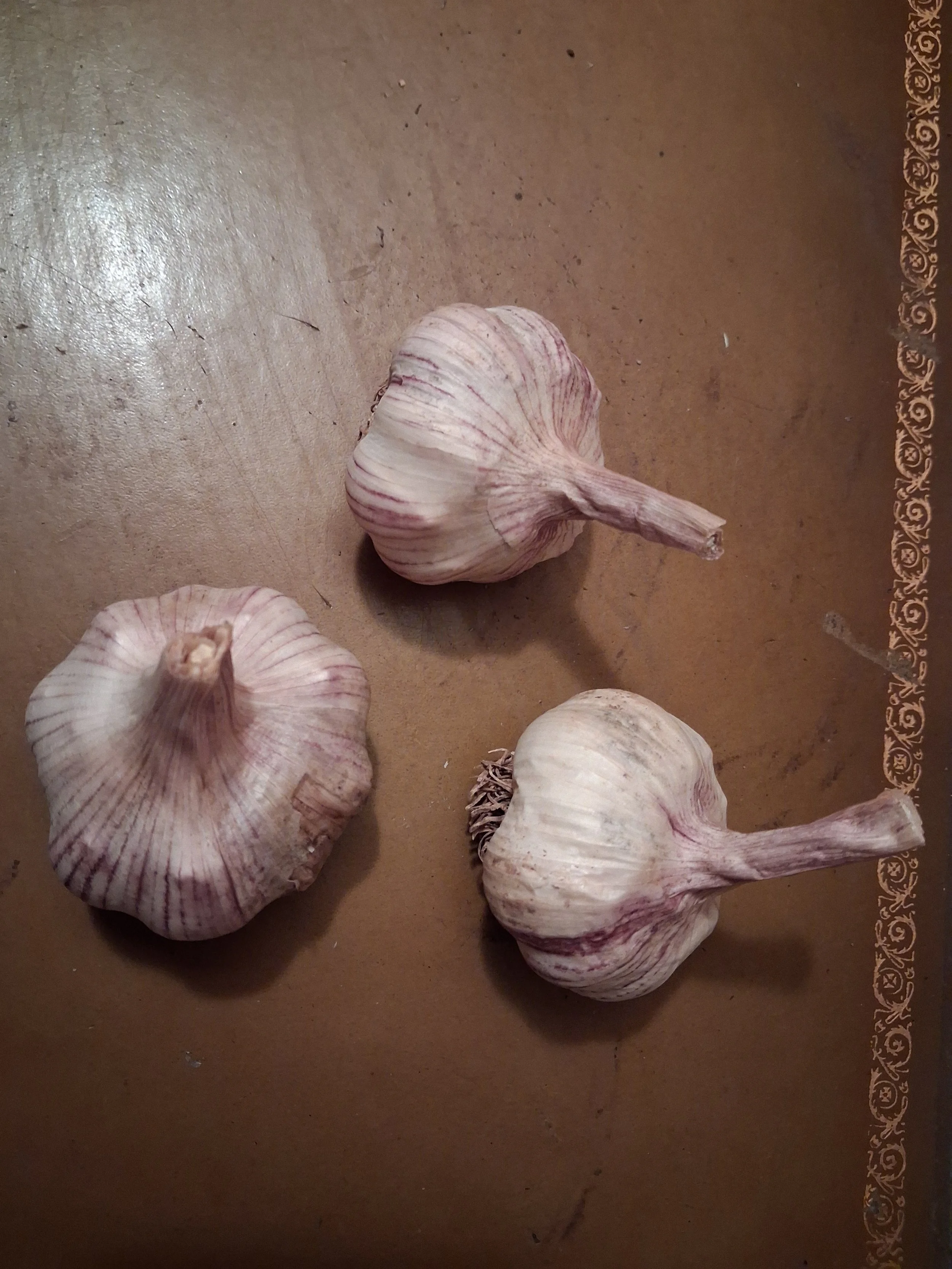
Heads feature plump outer cloves with a few smaller ones in the center. Bulb wrappers are lightly striped with purple. Cloves are loosely wrapped, leading to a medium storage life span. Plants sprout quickly with larger than average leaves. Not the most resistant to rust, but not the most susceptible - the plants can hold their own.
Most rocamboles are known to be late maturing, this one tends to mature in the mid-season for us, just before our creoles. Bulbs and plants are more prone to rot with excess rain/moisture. We stop watering with around 7-8 green leaves remaining and harvest with around 6 remaining.
Type: Rocambole, hardneck
Harvest window: Mid season
Storage potential: Medium term
The exact origin is unknown, it has a history of arriving with German immigrants to the US over a century ago. As a rocambole type, its flavor tends to be deep, earthy, velvety, even savory at times. When raw there’s a lingering heat with a sharpness that doesn’t overpower.
Heads feature plump outer cloves with a few smaller ones in the center. Bulb wrappers are lightly striped with purple. Cloves are loosely wrapped, leading to a medium storage life span. Plants sprout quickly with larger than average leaves. Not the most resistant to rust, but not the most susceptible - the plants can hold their own.
Most rocamboles are known to be late maturing, this one tends to mature in the mid-season for us, just before our creoles. Bulbs and plants are more prone to rot with excess rain/moisture. We stop watering with around 7-8 green leaves remaining and harvest with around 6 remaining.